Drainage Improvements
Improving the way water is collected, directed, and discharged can help prevent runoff from reaching vulnerable structures or destabilizing surrounding soil.
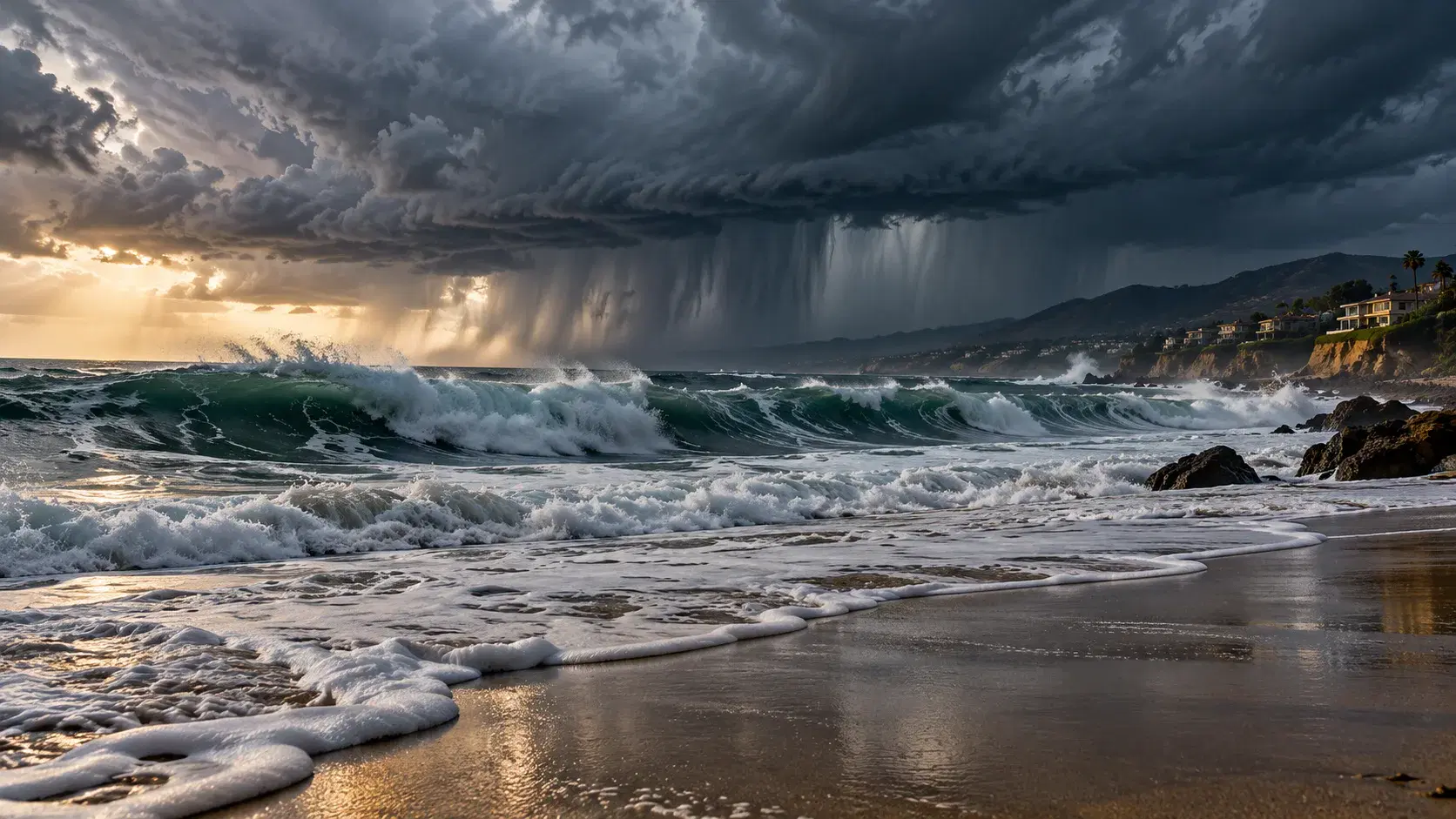
2026–27 Storm Readiness
Prepare coastal, hillside and fire-affected Los Angeles properties before heavy rain, runoff, erosion and high surf expose hidden vulnerabilities.
Southern California is heading into an unusually important storm season.
NOAA's September 2026 outlook reports that El Niño is strengthening, with a greater than 90% chance of a very strong El Niño during fall and winter 2026–27. NOAA also estimates a 75% chance that the October through December period reaches a level that would exceed previous El Niño events in its historical record dating to 1950. While El Niño does not guarantee that every part of Southern California will experience extreme rainfall or storm damage, the potential for significant impacts is enough that property owners should be evaluating vulnerabilities now.
For properties in Malibu, Pacific Palisades, Santa Monica, the Los Angeles foothills, and other coastal or hillside communities, preparation is especially important.
Heavy rain is only part of the concern. Drainage failures, concentrated runoff, saturated slopes, soil erosion, debris movement, high surf, coastal flooding, and repeated storms can turn small property issues into major damage.
Landmark Enterprise helps Southern California property owners prepare vulnerable sites, protect structures and surrounding land, address storm-related damage, and move properties toward recovery when severe weather causes problems.
You do not have to wait for visible damage to start preparing.
**Schedule a Property Consultation
Call (661) 674-7852**
For a closer look at prevention and recovery, read our 2026–27 El Niño guide.
El Niño occurs when ocean and atmospheric conditions across the tropical Pacific change in ways that can influence weather patterns around the world.
For Southern California, El Niño has historically been associated with an increased potential for powerful winter storms, heavy rainfall, large coastal waves, flooding, erosion, and other weather-related hazards. That does not mean every El Niño produces the same results or that every property faces the same risk.
What matters most is how an individual property responds when significant rain, runoff, wind, waves, or saturated soil arrive.
A home may perform well during ordinary rainfall while having vulnerabilities that become apparent only after several storms occur in succession.
That can include:
Preparing for El Niño means looking at the entire property as a system and asking one question:
Where is the water going to go?
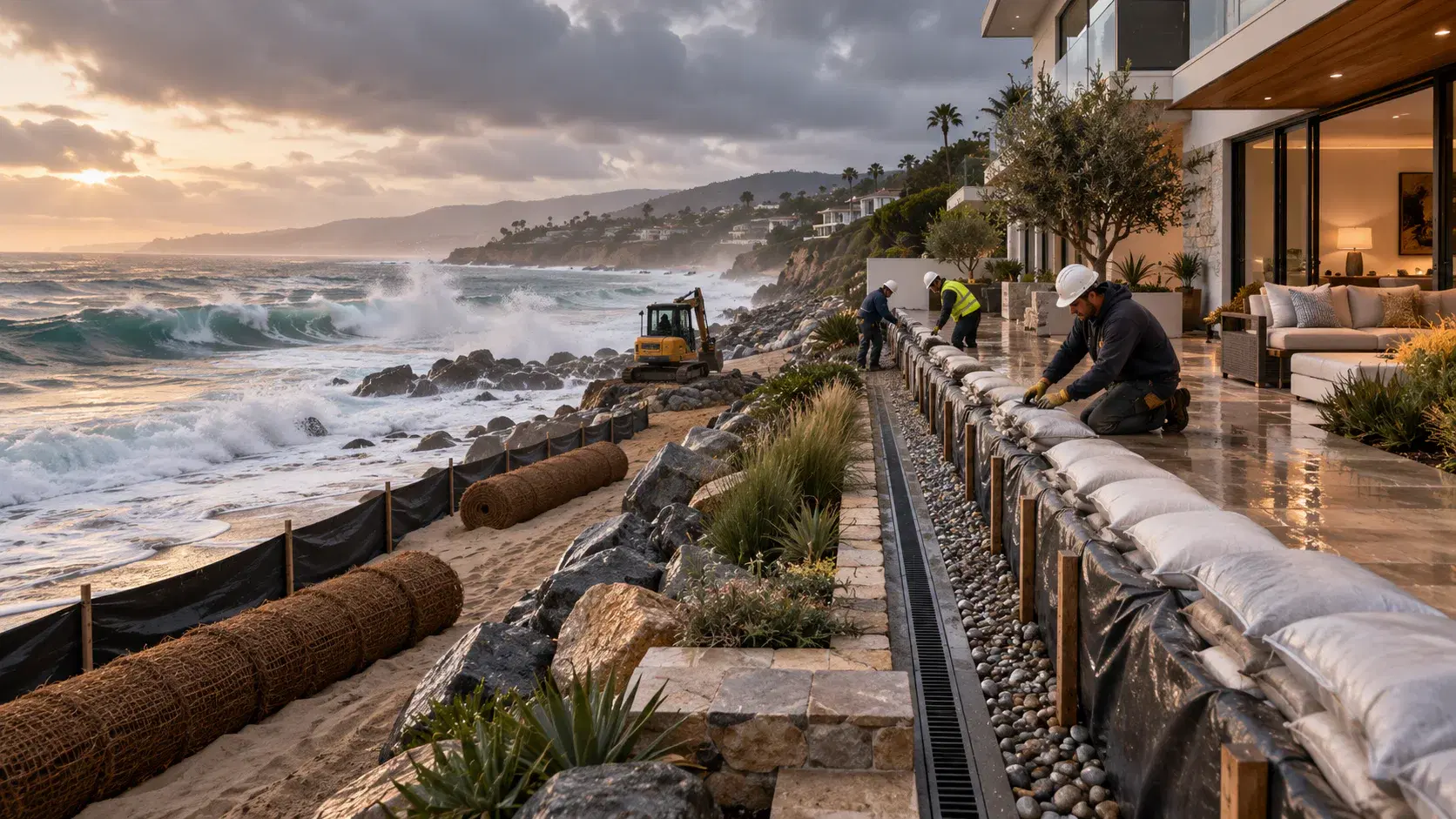
Southern California's coastline combines several conditions that can make major storm seasons particularly challenging.
Homes are built against hillsides, along bluffs, within canyons, near drainage corridors, and directly adjacent to the Pacific Ocean. Those incredible locations also expose properties to forces that typical inland construction may never encounter.
The California Coastal Commission is specifically encouraging coastal property owners to prepare for the 2026–27 El Niño, citing the potential for strong storms, heavy rainfall, large waves, coastal flooding, and erosion. The Commission recommends inspecting drainage systems, slopes, bluff areas, seawalls, revetments, and other shoreline-protection features before major storms arrive.
And these are not merely theoretical concerns.
In August 2026, the National Weather Service reported significant coastal erosion along the Malibu coast after large swell and high tides affected the region.
For beachfront and hillside property owners, the time to identify a vulnerability is before repeated winter storms begin exposing it.
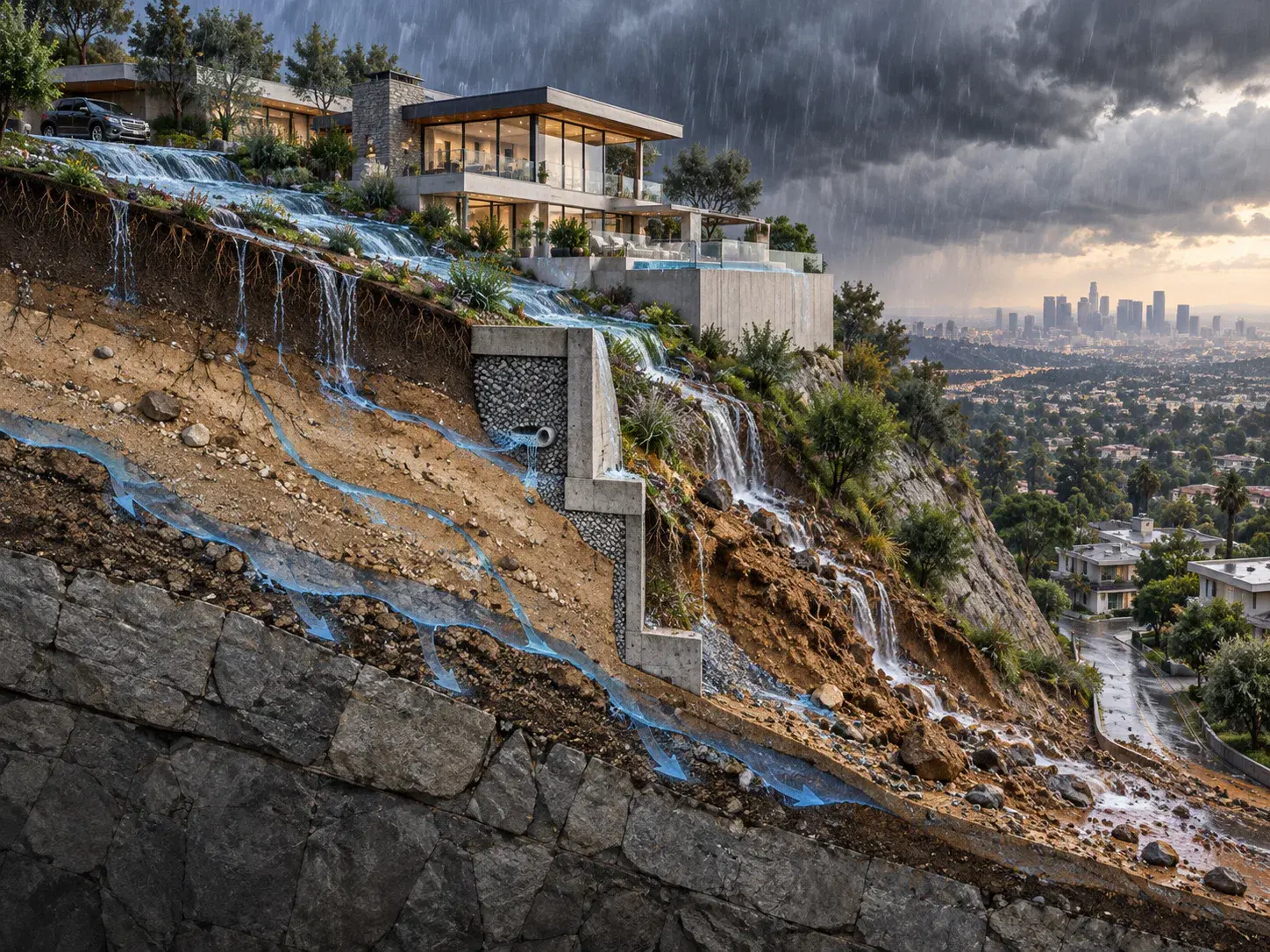
When people hear "El Niño," they often picture heavy rainfall and flooded streets.
For a property owner, the chain of events can be much more complicated.
Rain falling on roofs, driveways, patios, hardscape, hillsides, and landscaping has to travel somewhere.
When drainage is inadequate, obstructed, damaged, or poorly directed, water can collect where it should not.
That may lead to ponding, foundation exposure, landscape erosion, water intrusion, slope saturation, or runoff entering neighboring areas.
A relatively small drainage problem can become much more serious when multiple storms arrive before the property has time to dry.
Look for:
Explore Flood Control & Stormwater Management
Moving water does not need to look dramatic to cause damage.
Water following the same path repeatedly can remove soil little by little. Eventually that process can undermine landscaping, expose foundations, damage access roads, compromise drainage structures, or destabilize slopes.
Properties with steep terrain, newly disturbed soil, sparse vegetation, previous construction activity, or concentrated drainage may deserve additional attention before winter.
Los Angeles County recommends clearing drainage paths and notes that erosion can be addressed through measures including grading, drainage, and appropriate ground protection.
Depending on the property and site conditions, solutions may involve:
The correct solution depends on where the water originates, how quickly it moves, the soil conditions, the slope, and what structures or improvements are at risk.
Southern California hillside properties deserve particular attention during periods of prolonged rainfall.
As soil absorbs water, its characteristics change. Existing cracks, weak areas, poor drainage, or previous erosion can become more consequential when a slope becomes saturated.
Homeowners should pay attention to changes such as:
These conditions do not automatically mean a slope is failing, but they are reasons to investigate rather than simply waiting for the next storm.
Wildfire dramatically changes the way a watershed responds to rainfall.
Vegetation that previously slowed and absorbed water may be gone, and damaged soil can shed water much more quickly. During intense rain, runoff can carry mud, rocks, branches, burned material, and other debris downhill.
Los Angeles County identifies recently burned watersheds as areas of particular concern for debris flow and recommends that vulnerable properties prepare before heavy rainfall occurs.
For properties downstream from burned hillsides, preparation may involve evaluating:
Landmark's experience working with fire-affected properties also allows storm preparation and post-fire recovery needs to be considered together.
Read about Landmark’s fire debris cleanup work
For an oceanfront property, rainfall is only one side of an El Niño storm.
Large waves, elevated water levels, high tides, wave run-up, and erosion can attack a property from the ocean while rainfall and runoff affect it from behind.
That combination deserves special attention.
The California Coastal Commission recommends inspecting shoreline protection systems such as seawalls and revetments for distress, missing material, obstructed drainage, and other problems. Blufftop drainage, retaining systems, slopes, and objects near the shoreline should also be evaluated before severe weather.
Property owners should pay attention to:
Small changes can become important when several storm systems arrive during the same season.
Emergency coastal work can involve additional regulatory requirements.
The California Coastal Commission notes that activities involving grading, bluff alteration, mechanized equipment on beaches, shoreline protection, and certain emergency measures may require approval or a coastal development permit. Emergency authorization may also differ from approval for a permanent solution.
That makes advance planning especially valuable.
Waiting until waves are actively threatening a structure can dramatically reduce the available options.
Landmark Enterprise can help property owners evaluate construction needs, coordinate the appropriate project professionals, plan the work, and move toward an executable solution while regulatory requirements are being addressed.
Every property is different.
There is no universal "El Niño package," and effective storm preparation should not begin by selling a predetermined product.
It should begin by understanding the site.
Landmark can evaluate the property for areas where water, erosion, soil movement, or coastal conditions may create problems and develop an appropriate construction response.
Potential preparation work may include:
Improving the way water is collected, directed, and discharged can help prevent runoff from reaching vulnerable structures or destabilizing surrounding soil.
Strategic grading may help redirect surface water toward appropriate drainage locations and away from buildings, slopes, or other sensitive areas.
Exposed soil and active erosion areas can be stabilized or protected based on site conditions and anticipated water movement.
Hillside drainage, stabilization, and erosion-control measures may help reduce vulnerabilities before prolonged rainfall occurs.
Existing systems need a clear path to function. Sediment, vegetation, construction debris, and other obstructions can significantly reduce drainage capacity.
Some properties may benefit from temporary protective measures ahead of major storms while permanent work is being planned or permitted.
Beachfront and bluff properties may require assessment of existing protective structures, drainage conditions, erosion, and wave exposure.
Driveways, private roads, construction sites, and property entrances can also be affected by runoff, erosion, mud, and debris.
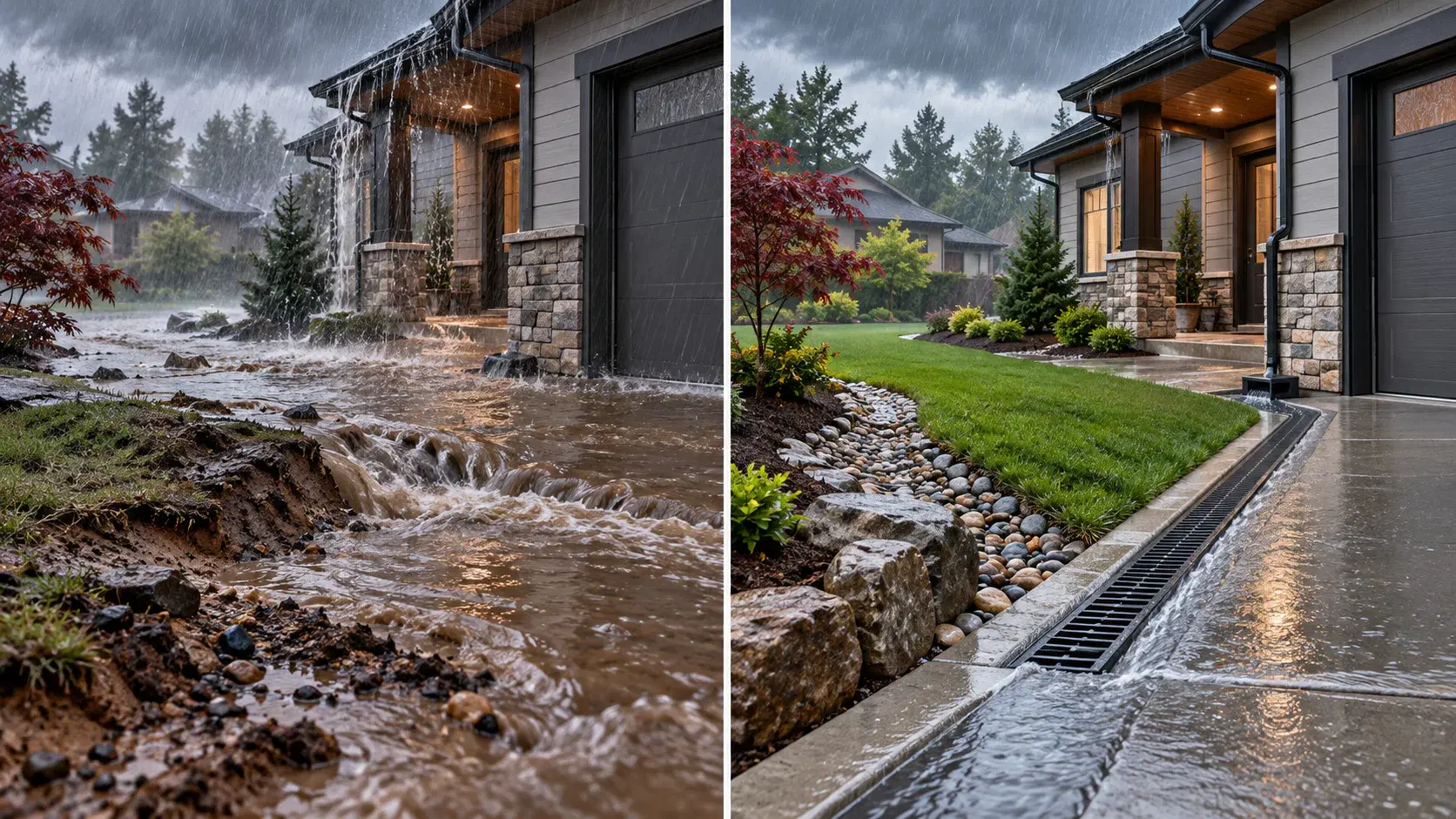
Preparation should happen while conditions are dry enough to safely inspect and address problems.
Look at drainage, slopes, retaining systems, low points, exposed soil, coastal protection, previous erosion, and areas that have historically collected water.
Water rarely respects property features.
A drainage issue at the top of a property can become an erosion issue farther down the slope and eventually a flooding issue near a structure.
Effective preparation considers that entire path.
Once a major storm is underway, personal safety comes first.
Do not enter moving water, unstable slopes, flooded roads, drainage channels, or areas being struck by large waves.
Los Angeles County warns residents to stay away from moving water, streams, flood-control channels, and other areas subject to sudden flooding and to follow directions from local emergency officials.
Emergency protective work should never take priority over evacuation orders or immediate safety.
One of the biggest mistakes property owners can make during an active storm season is assuming that surviving the first storm means everything is fine.
Damage can accumulate.
After significant rain or surf, inspect for changes including:
The first storm may create the vulnerability that the second storm exploits.
If damage has already occurred, the priority changes from preparation to stabilization and recovery.
Landmark Enterprise can help property owners move from the immediate problem toward a repair strategy.
Depending on the conditions, that may include:
The objective is not simply to clean up what happened.
Whenever possible, recovery should identify why the damage occurred so the same vulnerability is not left in place for the next storm.
Storm damage often creates two separate construction problems.
The first problem is immediate: stop conditions from becoming worse and make the property safe.
The second problem is long term: determine what needs to change so the property is better prepared in the future.
For example, removing mud may solve today's access problem.
It does not necessarily solve the drainage condition that caused mud to reach the property.
Replacing washed-out landscaping may restore appearance.
It does not necessarily stop the next storm from washing it out again.
Landmark approaches recovery with the permanent property in mind.
El Niño preparation may be particularly important for:
Even properties outside mapped flood zones can experience localized flooding or runoff problems when drainage cannot keep up with intense rainfall.
Landmark Enterprise works throughout Los Angeles and many of Southern California's most complex coastal and hillside communities.
Our service area includes:
From beachfront homes facing wave exposure to hillside estates managing runoff and erosion, each property requires a response appropriate to its terrain, construction, and surrounding environment.
Slope movement can affect foundations, retaining systems, utilities, roads, and landscaping.
Coastal damage may involve engineering, construction, permitting, and restoration.
Landmark Enterprise brings a construction-focused perspective to the entire property.
We help clients understand the problem, determine the appropriate next steps, coordinate the work required, and move from preparation or emergency response toward a lasting solution.
We work throughout Los Angeles' coastal and hillside communities and understand the unusual construction challenges presented by the region's terrain.
When storm preparation reveals a larger issue, Landmark can help carry the project beyond temporary protection and into permanent construction and repair.
Our work with fire-affected and damaged properties gives our team experience approaching projects where homeowners need both an immediate response and a path toward rebuilding.
Luxury properties often include complex architecture, significant landscaping, difficult access, specialized materials, coastal exposure, and extensive site improvements. Protecting those assets requires thoughtful planning rather than a one-size-fits-all response.
The best time to discover a drainage problem is when the ground is dry.
The best time to investigate erosion is before another storm removes more soil.
The best time to examine a slope is before it becomes saturated.
And the best time to evaluate a beachfront property is before high surf is reaching the structure.
With a significant El Niño underway for the 2026–27 season, Southern California property owners have an opportunity to prepare now.
If you are concerned about flooding, drainage, erosion, slopes, coastal exposure, storm damage, or your property's readiness for El Niño, contact Landmark Enterprise.
We can review your concerns, discuss the condition of the property, and help determine the appropriate next step.
Request an El Niño Property Consultation
Southern California cannot control what El Niño brings this winter.
Property owners can control how prepared they are when it arrives.
**Landmark Enterprise
**El Niño Preparation \| Flood Control \| Erosion Control \| Storm Damage Recovery \| Coastal & Hillside Construction
Property Consultation
Tell us about your flooding, drainage, erosion, slope, coastal exposure or storm-readiness concerns. We can help determine the appropriate next step.
Your information is kept private and confidential.